


I started collecting in 1992 — before I knew what a collector philosophy was
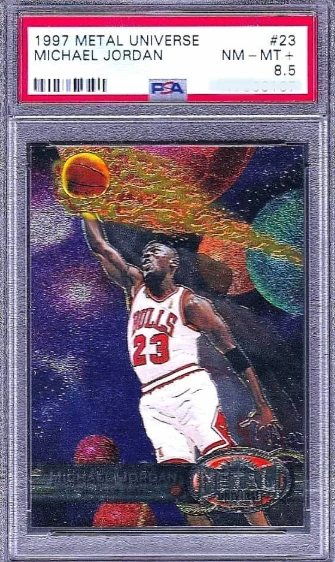
I was about ten when cards first became part of my world. Back then I was not thinking about population reports, comps, grading or whether something would be a smart buy ten years later. I was thinking about Michael Jordan, cartoons, comics, Spawn, The Maxx and that feeling of finding something small that somehow carried a whole world inside it.
That is still the part of collecting I care about most. As a kid, cards felt like a tiny treasure hunt. You saw an image that meant something to you, you wanted it, and if you were lucky you found a way to get it. I did not have much money, so I could not simply buy whatever I wanted. In hindsight, that limitation probably shaped the way I collect today more than I realized.
I stopped and started over the years. There were long stretches when I only collected sporadically. Then, like a lot of people, I came back much more seriously in 2020. The difference was that I returned with more knowledge, more access and more money than I had at ten — but also with a lot more noise around me.
A bigger trading card collection is not automatically a better one
When you come back into the hobby as an adult, it is easy to confuse activity with progress. There is always another release, another parallel, another auction, another card that suddenly feels urgent because everybody is talking about it.
I had to learn that my collection does not need to react to every release calendar. It does not need a new mail day every week. It does not even need to grow every month. If I do not see a card that really speaks to me, I can simply buy nothing.
Today I might buy one or two cards in an entire year. That sounds almost ridiculous in a hobby built around constant product, but for me it makes the collection stronger. I am not trying to fill space. I am waiting for the cards that make me stop.
What “Collect what you like” actually means to me
Collect what you like sounds obvious. It is not. It is something you have to learn when hype, price movement and social media are constantly telling you what should matter.
I do not think hype is automatically bad. Hype can be fun. It brings energy into the hobby and gets people excited. I also do not care how somebody else chooses to collect. If someone loves ripping boxes, flipping cards, building sets or chasing only high grades, that is their collection.
My point is simpler: I do not want hype to make my decisions for me.
Nostalgia matters
Jordan matters because I watched him, because the 1990s still have a visual language that hits me immediately, and because Chicago is tied to my own family history. Spider-Man, Black Panther and Marvel matter because comics and cartoons were part of my childhood too. When an object connects back to something that has been with you for decades, it carries more weight than a price chart can show.
Artwork matters
Sometimes the image is the whole reason. A card can stop me because of color, foil, photography, composition or the way a character has been drawn. I can look at a Miles Morales PMG and know within seconds why I want it. I do not need a market report to explain that feeling.
Scarcity matters — but only when I already care about the card
I like cards that are genuinely hard to find. Scarcity adds tension to collecting because you know another copy may not appear when you want it. But rarity alone is not enough. A rare card I do not care about is still a card I do not care about.
The cards I keep are often the cards I do not want to search for again
People have offered me money for cards I own. Sometimes the offer is objectively good. That does not automatically mean selling is the right decision.
There are cards in my collection where I know that if I let them go, I might never get the same opportunity again — or I would have to pay a price later that makes the whole idea pointless. That is especially true with genuinely scarce Marvel pieces, PMGs, unusual Black Panther cards and cards I searched for for a long time.
A grail is not necessarily the most expensive card. Sometimes it is the card you finally found and do not want to hunt for a second time.
That is irrational in the best possible way. Collecting is not a spreadsheet. The fact that somebody would pay me more than I paid does not erase the reason I wanted the card in the first place.
Why I buy fewer trading cards now
I have more knowledge than I had when I was ten, but the goal is actually closer to where I started: find the thing that creates that feeling of discovery again.
That does not happen every week. Most cards do not make me want to act. And that is fine. When something does appear — the right Jordan image, the right Marvel piece, a PMG, an artwork I cannot stop looking at, something strange like a numbered SpongeBob card — then I pay attention.
For me, buying less is not losing interest in the hobby. It is the opposite. It means I know what interests me.
Collector take: the collection has to look like you
I cannot tell another collector what makes a collection strong. Everybody has to answer that for themselves. My collection makes sense because Jordan can sit next to Miles Morales, Black Panther, Jackie Robinson, SpongeBob, vintage cards and things that are simply beautiful to me.
That mix is the point. It reflects what I grew up with, what I still enjoy and what I think is worth keeping.
Love what you collect. Collect what you like.
Ich habe 1992 angefangen zu sammeln – lange bevor ich wusste, was eine Collector-Philosophie ist
Ich war ungefähr zehn, als Karten Teil meiner Welt wurden. Damals habe ich nicht über Population Reports, Comps, Grading oder darüber nachgedacht, ob eine Karte in zehn Jahren ein guter Kauf sein könnte. Ich dachte an Michael Jordan, Cartoons, Comics, Spawn, The Maxx und an dieses Gefühl, etwas Kleines zu finden, das trotzdem eine ganze Welt in sich trägt.
Genau dieser Teil ist mir heute immer noch am wichtigsten. Als Kind war Sammeln eine kleine Schatzsuche. Du hast ein Bild gesehen, das etwas in dir ausgelöst hat, du wolltest es haben, und wenn du Glück hattest, hast du einen Weg gefunden, es zu bekommen. Viel Geld hatte ich natürlich nicht. Im Rückblick hat mich genau diese Begrenzung wahrscheinlich stärker geprägt, als ich damals verstanden habe.
Über die Jahre gab es lange Pausen und Phasen, in denen ich nur sporadisch gesammelt habe. 2020 bin ich – wie viele andere – wieder deutlich tiefer ins Hobby eingestiegen. Der Unterschied: Ich kam mit mehr Wissen, mehr Zugang und mehr finanziellen Möglichkeiten zurück als mit zehn. Gleichzeitig war aber auch viel mehr Lärm da.
Eine größere Trading-Card-Sammlung ist nicht automatisch eine bessere Sammlung
Wenn man als Erwachsener zurück ins Hobby kommt, kann man Aktivität leicht mit Fortschritt verwechseln. Es gibt immer das nächste Release, die nächste Parallel, die nächste Auktion und die nächste Karte, die plötzlich dringend wirkt, weil gerade alle darüber sprechen.
Ich musste lernen, dass meine Sammlung nicht auf jeden Release-Kalender reagieren muss. Ich brauche nicht jede Woche einen neuen Mail Day. Die Sammlung muss nicht einmal jeden Monat wachsen. Wenn ich keine Karte sehe, die mich wirklich packt, kaufe ich eben nichts.
Heute kaufe ich vielleicht ein oder zwei Karten im ganzen Jahr. In einem Hobby, das von ständig neuem Produkt lebt, klingt das fast absurd. Für mich macht genau das die Sammlung stärker. Ich versuche nicht, Platz zu füllen. Ich warte auf Karten, bei denen ich stehenbleibe.
Was „Collect what you like“ für mich wirklich bedeutet
Collect what you like klingt selbstverständlich. Ist es aber nicht. Das muss man erst lernen, wenn Hype, Preisbewegungen und Social Media ständig suggerieren, was angeblich wichtig sein soll.
Ich finde Hype nicht automatisch schlecht. Hype kann Spaß machen, bringt Energie ins Hobby und begeistert Menschen. Mir ist auch egal, wie andere sammeln. Wenn jemand Boxen rippt, Karten flippt, Sets komplettiert oder nur High Grades jagt: Das ist seine Sammlung.
Mein Punkt ist einfacher: Ich will nicht, dass der Hype meine Entscheidungen trifft.
Nostalgie zählt
Jordan bedeutet mir etwas, weil ich ihn gesehen habe, weil die 90er bis heute eine Bildsprache haben, die mich sofort trifft, und weil Chicago mit meiner eigenen Familiengeschichte verbunden ist. Spider-Man, Black Panther und Marvel gehören dazu, weil Comics und Cartoons ebenfalls Teil meiner Kindheit waren. Wenn ein Objekt an etwas anknüpft, das dich seit Jahrzehnten begleitet, hat es ein Gewicht, das keine Preisgrafik darstellen kann.
Artwork zählt
Manchmal ist das Bild allein der Grund. Eine Karte kann mich wegen Farbe, Foil, Fotografie, Komposition oder Illustration stoppen. Bei einer Miles Morales PMG weiß ich innerhalb von Sekunden, warum ich sie haben will. Dafür brauche ich keinen Marktbericht.
Seltenheit zählt – aber nur, wenn mir die Karte vorher schon etwas bedeutet
Ich mag Karten, die wirklich schwer zu bekommen sind. Seltenheit gibt dem Sammeln Spannung, weil man weiß, dass eine weitere Kopie nicht automatisch auftaucht, wenn man sie gerade will. Aber Seltenheit alleine reicht nicht. Eine seltene Karte, die mich nicht interessiert, bleibt eine Karte, die mich nicht interessiert.
Die Karten, die ich behalte, sind oft die, nach denen ich nicht noch einmal suchen will
Mir wurde schon Geld für Karten aus meiner Sammlung angeboten. Manchmal ist das Angebot objektiv gut. Das heißt trotzdem nicht automatisch, dass Verkaufen die richtige Entscheidung ist.
Bei manchen Karten weiß ich: Wenn ich sie abgebe, bekomme ich diese Gelegenheit vielleicht nie wieder – oder ich müsste später so viel bezahlen, dass die ganze Idee unsinnig wird. Das gilt besonders für wirklich seltene Marvel-Karten, PMGs, ungewöhnliche Black-Panther-Stücke und Karten, nach denen ich lange gesucht habe.
Ein Grail ist nicht automatisch die teuerste Karte. Manchmal ist es die Karte, die du endlich gefunden hast und kein zweites Mal jagen möchtest.
Das ist auf die beste Art irrational. Sammeln ist keine Tabellenkalkulation. Nur weil mir jemand mehr bietet, als ich bezahlt habe, verschwindet nicht der Grund, warum ich die Karte überhaupt haben wollte.
Warum ich heute weniger Trading Cards kaufe
Ich weiß heute viel mehr als mit zehn. Das Ziel ist trotzdem wieder näher an dem Gefühl von damals: etwas zu finden, das diese kleine Schatzsuche erneut auslöst.
Das passiert nicht jede Woche. Die meisten Karten lösen bei mir keinen Kaufimpuls aus. Und das ist vollkommen okay. Wenn dann etwas auftaucht – das richtige Jordan-Bild, ein starkes Marvel-Stück, eine PMG, ein Artwork, von dem ich nicht wegsehen kann, oder etwas so Ungewöhnliches wie eine nummerierte SpongeBob-Karte – dann werde ich aufmerksam.
Weniger zu kaufen bedeutet für mich nicht, das Interesse am Hobby zu verlieren. Es bedeutet das Gegenteil: Ich weiß genauer, was mich interessiert.
Collector Take: Die Sammlung muss nach dir aussehen
Ich kann keinem anderen Sammler sagen, was eine starke Sammlung ausmacht. Das muss jeder selbst beantworten. Meine Sammlung ergibt Sinn, weil Jordan neben Miles Morales, Black Panther, Jackie Robinson, SpongeBob, Vintage-Karten und Dingen stehen kann, die ich einfach schön finde.
Genau diese Mischung ist der Punkt. Sie zeigt, womit ich aufgewachsen bin, was ich bis heute mag und was ich für aufhebenswert halte.
Love what you collect. Collect what you like.